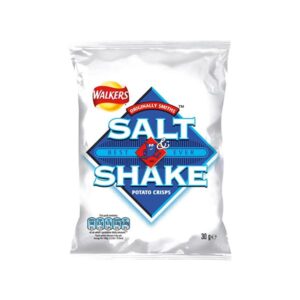
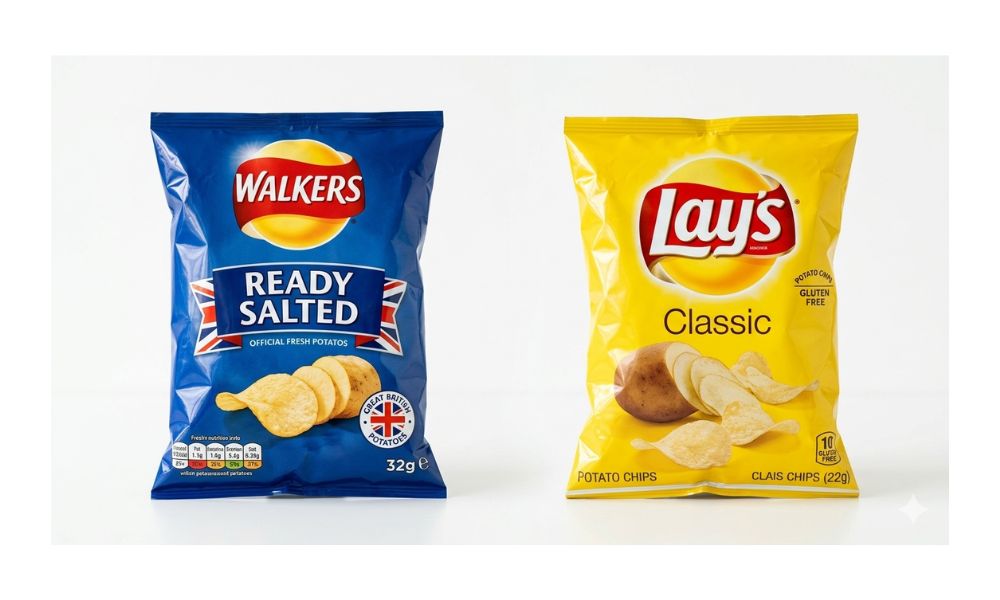
If you’ve ever stood in a supermarket aisle and noticed that your bag of Walkers crisps looks suspiciously similar to a bag of American Lay’s, you’re not imagining things. The connection runs very deep. However, the answer to whether Walkers is a British or American brand is more layered than a simple either/or.
Here’s the short version: Walkers started as a very British business in Leicester in 1948. American corporation PepsiCo then bought it in 1989 and still owns it today. So, depending on what you mean by the question, it’s genuinely both.
Grab These Too…
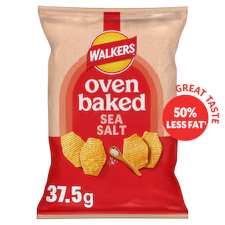
Walkers Baked Crisps – Sea Salt 37.5g
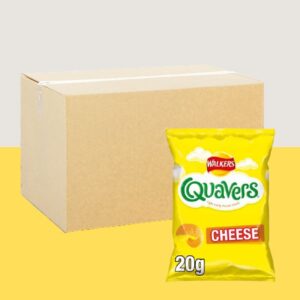
32x Walkers Quavers Cheese Standard 20g
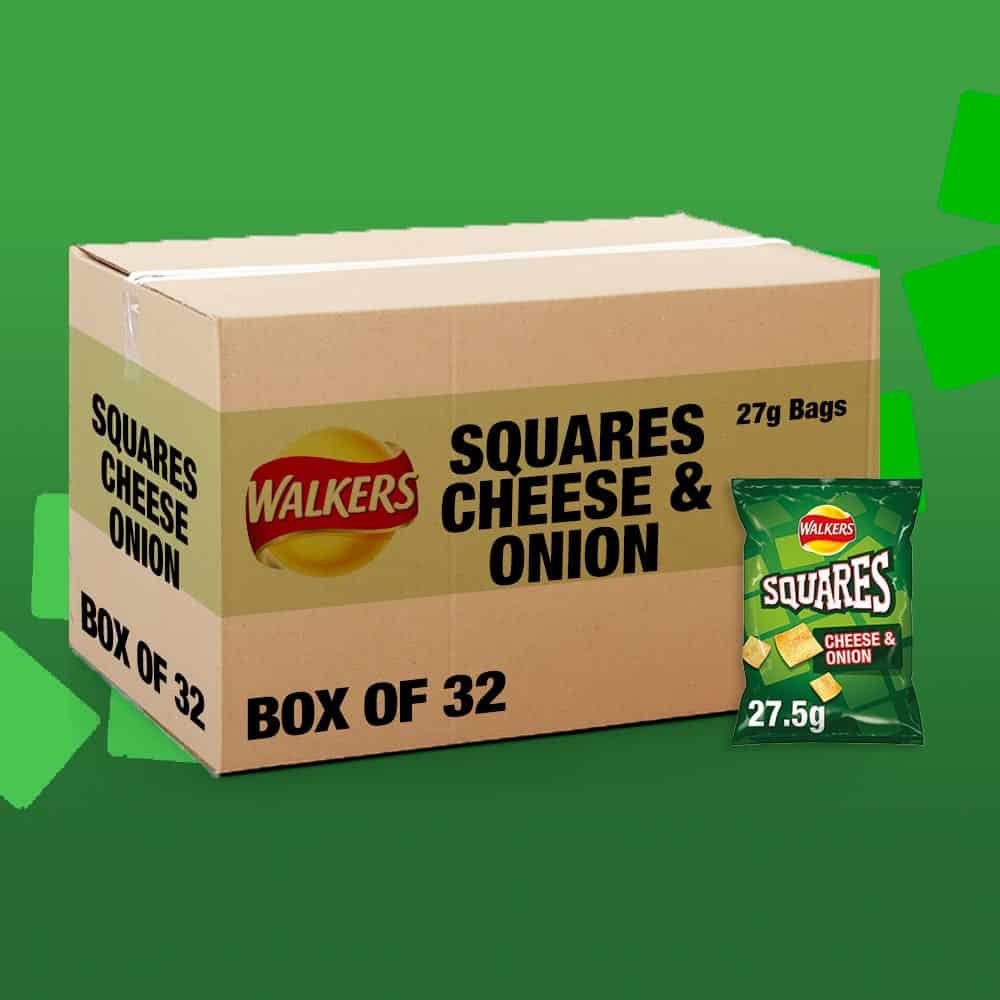
Walkers Squares Cheese & Onion 27.5g Box of 32
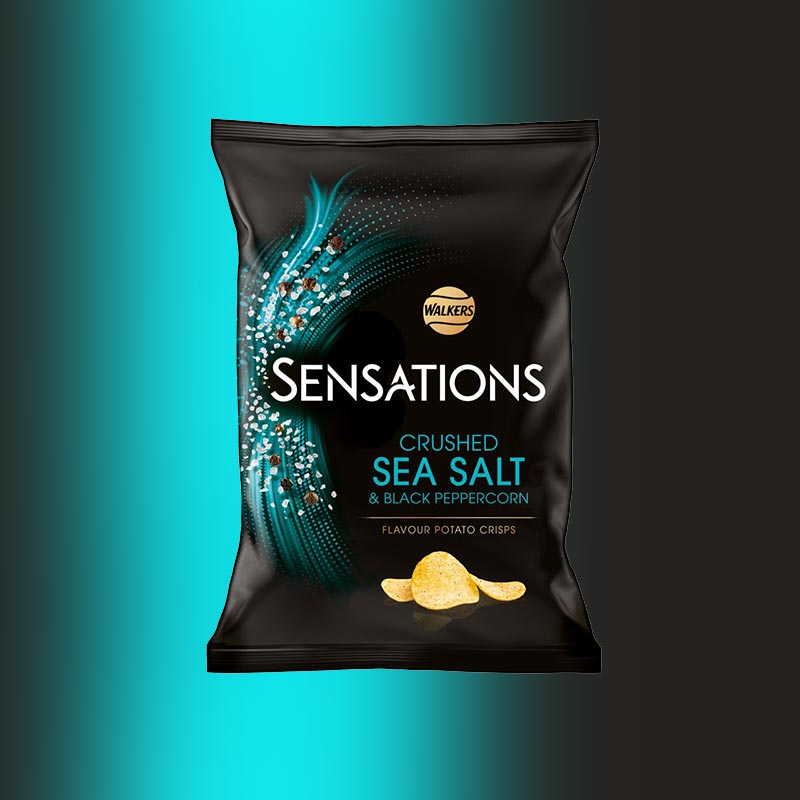
Walkers Sensations Crushed Sea Salt & Black Peppercorn 65g
TL;DR — Quick Summary
- Walkers was founded in Leicester, England in 1948 by a butcher named Henry Walker
- It is a British brand by origin, still manufactured in the UK
- PepsiCo (an American company) bought Walkers in 1989 and owns it today
- Walkers and Lay’s are essentially the same product, made by the same parent company
- Walkers also owns Wotsits, Quavers, and Sensations
Where Did Walkers Crisps Come From?
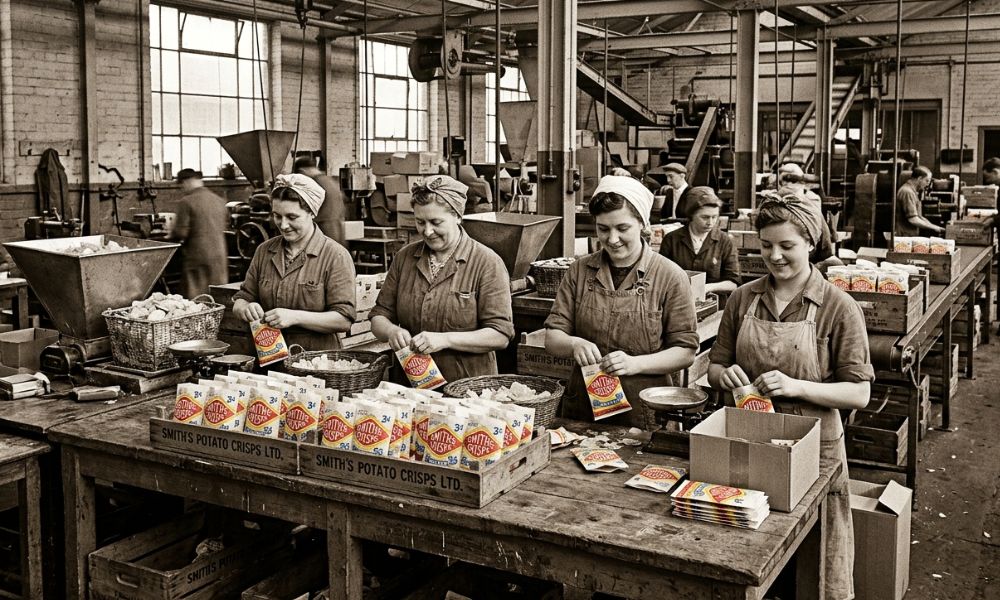
The story begins in Leicester, 1948. Henry Walker was a butcher who, in the post-war years of rationing, found himself with too much time and not enough meat to sell. Crisps seemed like a reasonable pivot. So he bought some equipment, hired a few staff, and started producing potato crisps from a small factory in the city.
For decades, Walkers stayed a regional brand. People in the Midlands loved it and it grew steadily, but it wasn’t yet a national name. That changed in the 1970s and 1980s, as the company expanded across the UK and invested heavily in manufacturing capacity.
By the mid-1980s, Walkers had become a serious player in the British snack market. It had built a strong reputation on familiar flavours, consistent quality, and what felt like a genuinely British product. As a result, when the time came to sell, it attracted serious interest from some very large buyers.
When Did Walkers Go American?
In 1989, PepsiCo acquired Walkers through its snack food division, Frito-Lay. At that point, Frito-Lay already ranked as the biggest snack company in the world, with Lay’s, Doritos, Cheetos, and many others in its portfolio. Walkers was the crown jewel of British crisps, and PepsiCo wanted a firm foothold in the UK market.
The acquisition didn’t change things overnight. Walkers kept its branding, its flavours, and crucially, its factories in the UK. The headquarters stayed in Leicester. For most consumers, nothing felt different at all.
But ownership is ownership. Today, Walkers operates as a wholly-owned subsidiary of PepsiCo, one of the largest food and beverage corporations in the world, headquartered in Purchase, New York.
Key fact: Walkers operates three large manufacturing sites in the UK: Leicester, Peterlee (County Durham), and Coventry. Despite American ownership, the crisps are still made here.
Are Walkers and Lay’s the Same Thing?
This is where it gets interesting. PepsiCo’s Frito-Lay division owns both Walkers and Lay’s. Both brands use the same basic production process and, in many cases, very similar recipes. The primary visual difference is that Lay’s packets are yellow while Walkers packets are blue (for Ready Salted).
In much of the world, PepsiCo sells what UK shoppers know as Walkers under the Lay’s name instead. In some markets, the Walkers name doesn’t exist at all. Essentially, PepsiCo runs different brand names for the same fundamental product depending on which country you’re in.
| Brand Name | Country | Owner |
|---|---|---|
| Walkers | United Kingdom & Ireland | PepsiCo / Frito-Lay |
| Lay’s | USA, Europe, most of world | PepsiCo / Frito-Lay |
| Smith’s | Australia | PepsiCo / Frito-Lay |
| Chipsy | Egypt & Middle East | PepsiCo / Frito-Lay |
That said, genuine differences in taste do exist. UK Walkers tend to be crispier and slightly saltier than American Lay’s. The potato sourcing also differs by region, and British taste preferences have shaped the seasoning calibration over decades. So while the production process is similar, the two products aren’t identical.
Grab Walkers American or British while you read
(Ad) Affiliate links: we may earn a commission
Who Is Gary Lineker and Why Is He On the Packets?
Since 1995, former England footballer Gary Lineker fronted the Walkers brand as its main spokesperson. It became one of the longest-running advertising partnerships in British history. The ads typically showed Lineker getting caught stealing crisps from someone, which turned into a long-running joke about a man who never received a yellow card during his entire professional football career.
The partnership ran for over 25 years, and as a result, Lineker became almost synonymous with the brand in Britain. In 2023, the relationship ended following a public controversy. Even so, the association between Walkers and Lineker remains deeply embedded in UK pop culture.
What Does Walkers Actually Own?
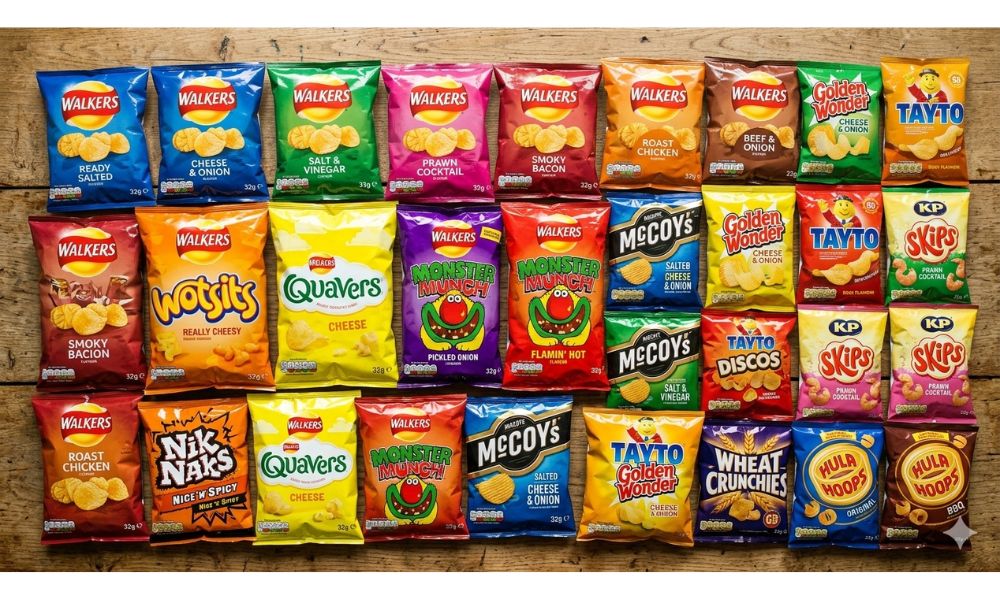
Walkers isn’t just the blue bag of ready salted crisps you might be picturing. In fact, several other well-known British snack brands sit under the Walkers umbrella:
- Wotsits — the orange cheesy puffs that have been around since 1970
- Quavers — light, curly cheese crisps, a staple of school lunchboxes since 1968
- Walkers Sensations — the premium, more intensely flavoured range
- Monster Munch — the monster-shaped corn puffs that Walkers produces as part of its wider portfolio
PepsiCo absorbed each of these well-known British brands over the years, though most people still think of them as distinctly British products. For a lot of shoppers, that cultural identity matters more than who signs the cheques.
Does It Matter Who Owns Walkers?
For a lot of people, the answer is no. Walkers still makes its crisps in the UK, they taste the same as they always have (debates about recipe changes aside), and the company employs thousands of British workers. From a practical standpoint, the American ownership stays largely invisible to the average shopper.
Golden Wonder Freaky Fangs and Grubs
Golden Wonder has gone all in on Halloween 2026 with two brand new limited edition sharing snacks, Freaky Fangs and Gruesome Grubs,…
For others, however, it matters quite a bit. There’s a genuine conversation to have about whether large multinationals buying up beloved national brands serves consumers, competition, or British food culture well. When a single American corporation owns Walkers, Doritos, Pringles (via a different route), and countless other snack brands, the choice on the supermarket shelf looks wider than it actually is.
If provenance matters to you, brands like Golden Wonder, Kettle Chips, and Pipers Crisps remain genuinely independent British alternatives worth considering.
The PepsiCo Crisp Empire in the UK
To understand just how dominant PepsiCo is in British snacking, consider this: industry figures consistently put the Walkers share of the UK crisp and snack market at well over 50%. That makes it, by some distance, the most dominant crisp brand in the country.
The Walkers factory in Leicester reportedly produces around 11 million bags of crisps per day. That is a lot of crisps. So while PepsiCo is American in ownership, the operational scale of Walkers in the UK is vast, and the brand has deep economic roots in Britain.
So, Is Walkers British or American?
The honest answer is: British by birth, American by ownership.
Leicester gave birth to the brand. England still houses the factories. British food culture shaped the recipes. The branding, the flavours, the cultural touchstones (Gary Lineker, cheese & onion as the nation’s favourite) all point firmly at Britain.
However, PepsiCo, headquartered in New York, collects the profits from every bag sold. So if your question is about the taste, the heritage, or the feel of the product, Walkers is British. If your question is about where the money ends up, it’s American.
Shop Walkers Crisps at One Pound Crisps
We stock the full range of Walkers products, from classic bags to full cases. Whether you want Walkers Crisps, Wotsits, Quavers, or Sensations, you’ll find them all in our full crisp shop. Prices from 35p a bag, with same-day dispatch before 3pm.
Browse all Walkers products →
Frequently Asked Questions
Who founded Walkers Crisps?
Henry Walker, a butcher from Leicester, founded the brand in 1948. He started producing crisps as a way to use his factory equipment after meat rationing made his original trade difficult.
Where are Walkers Crisps made?
Walkers makes its crisps in the UK, primarily at factories in Leicester, Peterlee, and Coventry. Although PepsiCo owns the company, production stays in Britain.
Are Walkers the same as Lay’s?
PepsiCo makes both products using similar processes. In most countries, PepsiCo sells what UK shoppers know as Walkers under the Lay’s name. Some differences in recipe and taste do exist, but the core product is comparable.
When did PepsiCo buy Walkers?
PepsiCo acquired Walkers in 1989 through its Frito-Lay snack division.
Is Golden Wonder British?
Yes. Golden Wonder is an independently owned British crisp brand and one of Walkers’ main domestic rivals. It has no connection to the PepsiCo group.