Seabrook Crisps are the crinkle-cut crisps from Bradford. If you grew up in the north of England, you probably already know them well. If you grew up elsewhere, you might have only recently discovered them, possibly through a gluten-free diet, since Seabrook are one of the few mainstream crisp brands that can genuinely claim to be gluten free across their core range.
This is the full Seabrook story: how a Bradford fish and chip shop owner invented Britain’s first crinkle-cut crisp, what makes Seabrook different from the big brands, and which flavours are worth trying.
Grab These Too…
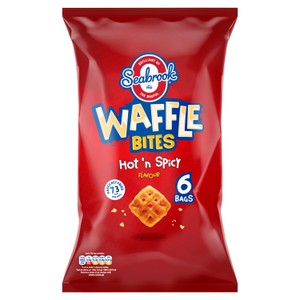
Seabrook Waffle Bites Hot & Spicy 6 Pack
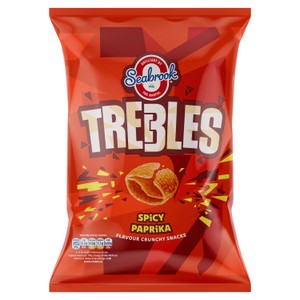
Seabrook Trebles Spicy Paprika Sharing Bag
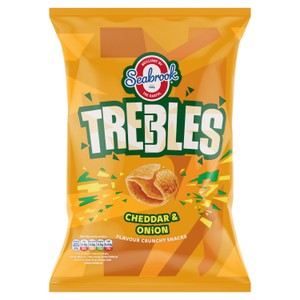
Seabrook Trebles Cheddar & Onion Sharing Bag
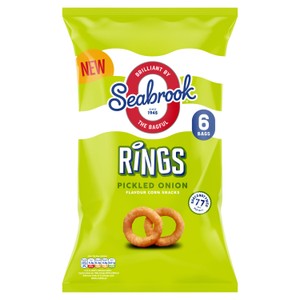
Seabrook Loaded Rings Pickled Onion
Seabrook Crisps were founded in Bradford in 1945 by Charles Brook and invented the UK’s first crinkle-cut crisp. They are certified gluten free by Coeliac UK across their core range, suitable for vegetarians and vegans, and made from potatoes grown within 50 miles of the Bradford factory. The brand has been owned by Japanese company Calbee since 2018.
The history of Seabrook Crisps
A fish and chip shop in Bradford
The Seabrook story starts with a clerical error. Charles Brook, a Bradford man who ran a fish and chip shop, went to collect some photos from a processing shop. The clerk had written “Seabrook” on the packet instead of “C. Brook”. Charles liked the name and used it for his fish and chip business. When he and his son Colin began frying potato crisps using their commercial fryer in the late 1940s to sell to customers queuing for their chips, the Seabrook name went with the product.
The exact founding date varies slightly by source. The company was incorporated in 1949, but the crisp-making began a few years earlier, around 1945 to 1947. Seabrook crisps were initially delivered door to door around Bradford before the product expanded into shops and pubs.
The first crinkle-cut crisp in Britain
Seabrook claim to have invented the crinkle-cut crisp in Britain. The distinctive wave-cut edge is the brand’s most recognisable feature and the reason the crisps have a different texture to a flat-cut potato crisp: more surface area means more seasoning contact and a different snap when you bite down. Whether Seabrook was genuinely first or simply the most persistent with the format, crinkle-cut is now central to their identity in a way it is not for any other major UK brand.
Growing the business
Colin Brook took over from Charles and built the business significantly through the 1960s and 1970s, reportedly turning down deals with supermarkets until 1996 despite being close friends with Sir Ken Morrison. In 1978, Seabrook purchased a factory site on Duncombe Street in Bradford, and the Princeville factory opened two years later, remaining in use to this day. Production at the original Allerton site continued until 2004.
In 1980, Seabrook became the first crisp brand to use sunflower oil for cooking, a move that was ahead of the wider industry. In 2007, MSG and all e-numbers were removed by reformulating the flavours. In 2009, Seabrook received Coeliac UK certification for their gluten-free range, which remains one of their most significant commercial differentiators.
Grab Seabrook Crisps while you read
(Ad) Affiliate links: we may earn a commission
Calbee takes over
In October 2018, Seabrook Crisps was acquired by Calbee Inc., the leading snack brand in Japan. The brand continues to operate from Bradford under the Calbee UK name, and the crinkle-cut crisps are still made in Yorkshire.
What makes Seabrook different?
Gluten free certification
Most mainstream crisp brands either contain gluten as an ingredient or cannot certify their products due to manufacturing cross-contamination. Seabrook are certified gluten free by Coeliac UK across their core crinkle-cut range, making them one of the very few mainstream options that coeliacs can eat with confidence. This is a genuine point of difference and a key reason Seabrook has built a loyal following outside its core northern England market.
Local potatoes
Seabrook sources most of its potatoes from farms within 50 miles of the Bradford headquarters. The company uses Lady Claire and Lady Jo varieties primarily, chosen for producing a light crisp with what Seabrook describe as “two bites and a melt in the mouth.”
Simple ingredients
The Sea Salted variety contains just potatoes, sunflower and rapeseed oil, and sea salt. The Beefy variety, which is also gluten free and vegan despite the name, contains potatoes, oils, yeast extract, rice flour, onion powder, flavouring, and citric acid. No meat, no dairy, no unnecessary additives.
The current Seabrook flavour range
The core crinkle-cut range includes Cheese and Onion, Salt and Vinegar, Prawn Cocktail, Beefy, and Sea Salted. The Beefy flavour is vegan and gluten free despite the name, using yeast extract rather than any animal-derived beef flavouring. In January 2025, Seabrook and Morrisons launched three limited-edition flavours to celebrate Bradford’s status as 2025 UK City of Culture: Fish and Chips, Chicken Curry, and Cheddar and Chutney, exclusive to Morrisons.
The full range, including boxes for bulk buying, is available at the Seabrook category at One Pound Crisps. If gluten-free crisps are what you are after more broadly, the gluten-free crisps guide covers the full UK picture.
Where are Seabrook Crisps made?
Seabrook Crisps are made in Bradford, West Yorkshire, at the Princeville factory on Duncombe Street. The factory has been in use since 1980. Most of the potatoes used are grown within 50 miles of the Bradford site.
Are Seabrook Crisps gluten free?
Yes. Seabrook’s core crinkle-cut range is certified gluten free by Coeliac UK. This makes them one of the few mainstream UK crisp brands that coeliacs can eat with confidence. Always check individual packets as new products may have different allergen profiles.
Who owns Seabrook Crisps?
Seabrook Crisps has been owned by Calbee Inc., the leading Japanese snack brand, since October 2018. The brand continues to be based in Bradford and the crisps are still made in Yorkshire.
When were Seabrook Crisps founded?
Seabrook Crisps was founded in Bradford around 1945 by Charles Brook, who named the company after a clerical error at a photo processing shop. The company was formally incorporated in 1949.
What flavours do Seabrook Crisps come in?
The core range includes Cheese and Onion, Salt and Vinegar, Prawn Cocktail, Beefy, and Sea Salted. All are gluten free and suitable for vegetarians. The Beefy and Sea Salted varieties are also vegan. Limited edition flavours appear periodically.
Did Seabrook invent the crinkle-cut crisp?
Seabrook claim to have invented the crinkle-cut crisp in Britain. The wave-cut edge is central to the brand’s identity and distinguishes Seabrook from flat-cut competitors. The distinctive cut increases surface area, which affects seasoning coverage and texture.