KP is one of those names that everyone in Britain knows but almost nobody can fully explain. You know the peanuts. You probably know the crisps. You might be eating a bag of Hula Hoops right now without realising they are a KP product. But ask most people what KP stands for and you will get a blank stare or a wrong answer.
This is the full story of KP Snacks: where the name comes from, how a Victorian jam maker from Rotherham became the second largest snack manufacturer in Britain, and which brands are actually KP products.
Grab These Too…
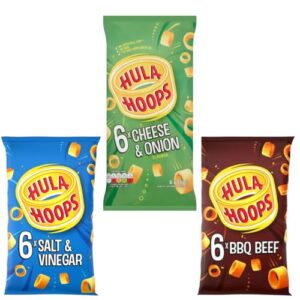
Hula Hoops Snack Crisps Multipacks
Herr's Barbeque Potato Chips 28g
Jacob's Mini Cheddars Sticks Grilled Cheddar & Sizzling Steak 75g Box of 14
Rap Snacks Snoop Dogg Cheddar BBQ 71g
KP stands for Kenyon Produce. The company was founded in Rotherham in 1853 as a jam and pickle maker, moved into nuts in the 1950s, and launched its first crisps in 1973. KP is now owned by German company Intersnack and is responsible for Hula Hoops, McCoy’s, Skips, Nik Naks, Space Raiders, Wheat Crunchies, Discos, Tyrrells, and several other brands.
What does KP stand for?
KP stands for Kenyon Produce. The company was founded in 1853 in Rotherham, South Yorkshire, by Charles Kenyon, initially as a confectionery, jam and pickle maker called Kenyon & Son. Over the following decades the business expanded, became a limited company in 1891 under the name Kenyon, Son and Craven, and eventually landed in the hands of Simon Heller in 1948, who renamed it Kenyon Produce, shortened to KP.
The KP Nuts brand launched in 1953 under that name, two penny packets of salted peanuts that became the first nationally distributed branded nut product in Britain. The crisp side of the business came later, when KP merged with Meredith & Drew in 1968 after United Biscuits acquired the company for £3.5 million. Meredith & Drew’s crisps were rebranded under the KP name.
The KP timeline
From jam to nuts to crisps
The 100 years between 1853 and 1953 are essentially the story of a business finding its feet. Charles Kenyon started making jam and confectionery in a small Rotherham unit. The company grew, changed names several times, survived two world wars, and by the late 1940s was producing roasted and salted nuts, originally for sale in cinemas.
By 1965, Kenyon, Son and Craven employed over 1,500 people and had essentially created the salted peanut category in Britain. National dominance of the nut market led to the United Biscuits acquisition in 1968, which brought the crisp manufacturing arm of Meredith & Drew into the fold.
Grab KP Crisps while you read
(Ad) Affiliate links: we may earn a commission
The golden era of KP crisp launches
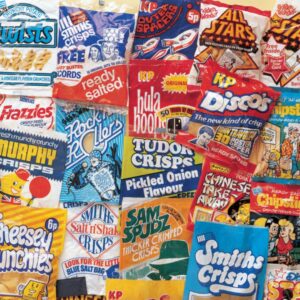
The period from 1973 to 1992 is when KP built most of the brand portfolio it still carries today. Hula Hoops launched in 1973, Skips in 1974, Discos in 1979, McCoy’s in 1985, Space Raiders in 1987, Frisps in 1989, and Roysters in 1992. Each of those brands has its own fan base and several are still in the top tier of UK snack sales. That run of launches over roughly two decades is impressive by any measure and explains why so many classic British crisps trace back to the same Rotherham-to-Slough company.
Intersnack takes over
In 2012, United Biscuits sold KP Snacks to Intersnack, the German snack food company. KP Snacks has remained based in Slough since then, with its largest factory on Teesside. The Intersnack acquisition also brought Tyrrells into the portfolio, adding a premium hand-cooked crisp brand alongside the value and mainstream ranges.
Which brands does KP make?
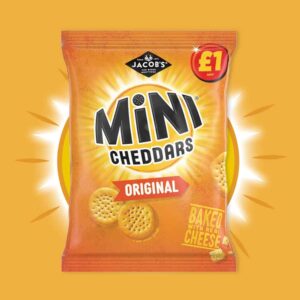
The current KP Snacks portfolio covers a wide range of price points and formats. The main brands you will recognise include Hula Hoops, McCoy’s, Skips, Nik Naks, Space Raiders, Wheat Crunchies, Discos, Frisps, Roysters, Pom-Bear, Tyrrells, Popchips, Butterkist, and KP Nuts. Mini Cheddars, one of the best-selling cheese-flavoured snacks in the UK, are also a KP product. That is a significant chunk of the British snack aisle under one roof.
KP Crisps: the own-brand range
Beyond the individual brand portfolio, KP produces a range of straightforward potato crisps under the KP name. These are the plain, own-brand style crisps that sit in the budget aisle: ready salted, salt and vinegar, cheese and onion. They are no-frills, reliable, and notably cheaper per bag than the branded equivalents. The KP crisps range is a separate product from the branded portfolio, though it comes from the same manufacturer.
The KP category at One Pound Crisps shows what is currently in stock across the KP range, including both own-brand crisps and the wider portfolio brands.
Is KP British?
By origin and operation, yes. The company has been making snacks in the UK since 1853 and still manufactures primarily in Britain, with factories in Teesside, Ashby-de-la-Zouch, and other UK sites. The parent company Intersnack is German, which is the same situation as Hula Hoops being described as British despite Intersnack ownership. The manufacturing, the brands, and the workforce are based in the UK. The profits flow to Germany. That is a distinction worth making, even if it does not change the taste of the crisps.
What does KP stand for in KP Crisps?
KP stands for Kenyon Produce. The company was originally founded as Kenyon & Son in Rotherham in 1853, and the KP name came from the Kenyon Produce rebrand in the late 1940s when Simon Heller took over the business.
Who owns KP Snacks?
KP Snacks is owned by Intersnack, a German snack food company, which acquired it from United Biscuits in 2012. KP Snacks remains based in Slough, UK, and manufactures across several UK factories including a large facility on Teesside.
What brands does KP make?
KP Snacks makes Hula Hoops, McCoy’s, Skips, Nik Naks, Space Raiders, Wheat Crunchies, Discos, Frisps, Roysters, Pom-Bear, Tyrrells, Popchips, Butterkist, Mini Cheddars, and KP Nuts, among others. It is the second largest snack manufacturer in Britain.
When was KP founded?
The company that became KP was founded in 1853 in Rotherham by Charles Kenyon as a jam and confectionery maker. It moved into nuts in 1948 and crisps in the 1960s and 1970s. The KP brand name came into use in the 1950s with the launch of KP Nuts.
Where are KP crisps made?
KP Snacks manufactures across multiple UK sites, including a major factory on Teesside, a facility in Ashby-de-la-Zouch, and a factory in Rotherham. Different brands within the KP portfolio are produced at different sites.